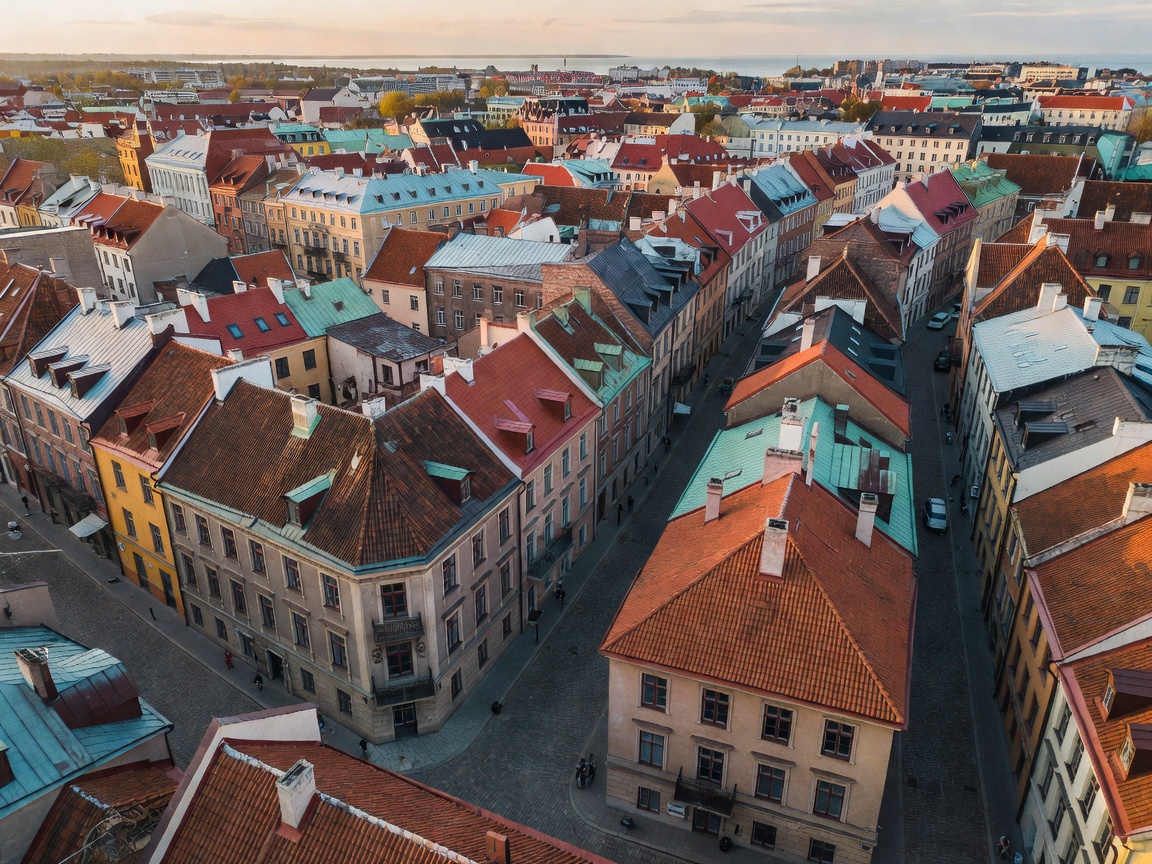
The Baltic region is compact on a map, but its museum landscape is not a single corridor. National collections, city museums, specialist institutions, and local heritage sites sit within different transport and historical contexts. Start with geography, then choose a theme.
Three states, connected by a coastline
Latvia, Lithuania, and Estonia are neighbouring states on the eastern shore of the Baltic Sea. Their capital cities—Riga, Vilnius, and Tallinn—are useful orientation points, not substitutes for the rest of each country. Each has national and municipal collections, art institutions, and historic environments. The balance of subjects differs by institution and place.
Travel between the capitals can be combined with shorter city-based visits, but the region’s smaller collections are more dispersed. A route that includes coastal, rural, or island locations needs more time and transport planning. Check current opening arrangements with each institution before setting a day around it.
Capital cities as collection clusters
Riga provides a broad entry into Latvian art, history, architecture, and urban culture. Its historic centre and later neighbourhoods create useful context for museums concerned with the city’s development. Vilnius brings together collections shaped by Lithuanian history, art, and cultural life. Its layered urban fabric is an important part of that context. Tallinn offers collections connected with Estonian history, maritime life, design, and the city’s built environment.
These are broad guideposts. They are not claims that every subject is concentrated in one capital, or that a single institution represents a national story. Look for collection descriptions and curatorial scope. A museum’s title alone may not explain what it holds or how it interprets the subject.
Regional collections change the scale
Regional museums can focus on a town, district, occupation, local industry, landscape, or community history. Ethnographic and open-air collections often help explain building traditions and everyday material culture. Coastal institutions may interpret fishing, shipping, ports, or island life. Former industrial areas can connect technology and labour history with the physical remains of production.
In Lithuania, Kaunas and Klaipėda offer different urban and historical frames from Vilnius. In Estonia, Tartu and Pärnu provide further starting points, alongside island and coastal contexts. Latvia’s regional cities and countryside add local collections beyond Riga. These places are not interchangeable; their value depends on the question a visitor wants to follow.
Build a route around a question
Choose one geographic scale first: capital city, second city, coastline, or a district. Then choose a collection subject. A two-part route—one broad history collection and one specialist institution—can offer more context than a list of unrelated stops. Check how much time is available, how the venues relate to each other, and whether travel between them is practical.
- City route: pair an art or history collection with a walk through the surrounding urban fabric.
- Coastal route: look for maritime, port, island, and local history subjects.
- Regional route: check transport and opening information before travelling outside a city.
- Cross-border route: choose a shared theme, then compare how institutions frame it locally.
Public transport, seasonal access, language options, and visitor services vary. Consult the institution’s own information for current details. This guide does not publish unverified opening times, ticket prices, addresses, or current exhibitions.
Good for / What to know
Good for
- Visitors deciding which city or region to use as a base.
- Researchers comparing urban and local collection contexts.
- Anyone building a theme-led itinerary across borders.
What to know
- Capital cities have broad choices, but do not represent every regional story.
- Regional venues may require advance transport planning.
- Collection scope and visitor access can change. Confirm directly before travel.
Selection criteria
This guide groups places by geography and the questions a visitor might ask. It does not rank museums. Inclusion as a subject area reflects a clear cultural or collection theme, not an endorsement, affiliation, or guarantee of access. Use the region pages to continue with a country-specific frame.